
FB

Express Packing

Heavy Duty Industrial Crating, Forklift Damage Case Study | Express Packing

Heavy Duty Industrial Crating Case Study, Preventing Forklift Damage When Product Weights Are Unknown

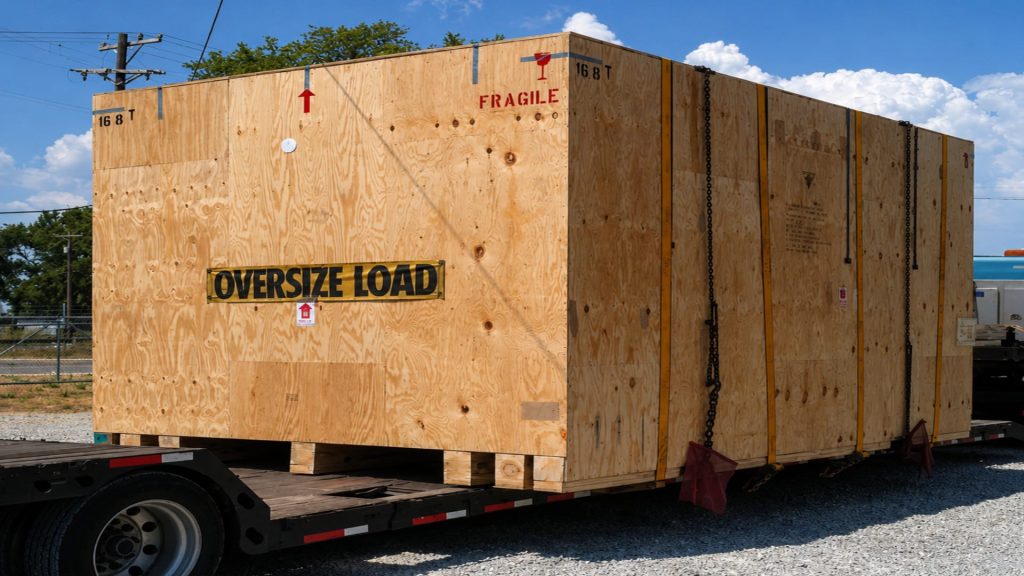
When product weights are uncertain, even a well-built crate can fail at the worst moment. In this heavy duty industrial crating case study, Express Packing shows how engineering the base and blocking around unknown loads kept forklift handling from breaking through a customer’s crates.

— The Challenge

The Hidden Risk of Crating Without Accurate Weights

A customer needed to ship products but did not know their exact weights. Without accurate figures, the crates were under-rated for the real load. During handling, forklift tines contacted weak points in the base and broke through, putting both the product and the schedule at risk.

The core problems:

  • Unknown weights. No reliable figures to size the base or runners.
  • Under-rated crates. Bases built for lighter loads than what arrived.
  • Forklift breakthrough. Tines struck weak points and punched through during lifting.

— The Express Packing Solution

Reinforcing the Crate Where It Matters Most

Rather than guess at a single weight, Express Packing engineered the crate to perform across a range of loads.

  • Strategic blocking for heavier items. Internal blocking was positioned to carry concentrated weight and keep heavy components stable in transit.
  • Reinforced bases for unknown or shifting weight. The base was built up to handle loads heavier than expected and to absorb weight that moves during handling.
  • Flexible blocking and bolting methods. Securing methods did not require exact bolt placement in advance, so the crate adapted to the product instead of forcing the product to fit.

— The Result

From Uncertain Loads to Confident Handling

Forklift handling damage dropped sharply, and the crates performed as intended even when product weights varied from one shipment to the next.

Result at a glance. Significantly fewer base failures during forklift handling, with consistent performance across uncertain and shifting loads.

Key Benefits

  • Reduced base failures. Stronger bases stand up to forklift contact during handling.
  • Better forklift engagement points. Tines meet load-bearing structure, not weak spots.
  • Flexibility when weights are uncertain. Designs hold up even without exact figures.
  • Stronger, more adaptable crates. One build absorbs variation instead of failing at it.

Why This Approach Works for Heavy Loads

Heavy and oversized shipments rarely arrive with perfect documentation. By designing for the upper end of the load and building in flexible securing methods, Express Packing removes the single biggest risk in heavy duty industrial crating, a base that gives way under a forklift.

FAQ

Frequently Asked Questions

What if we do not know our product's exact weight?

That is exactly the scenario this approach is built for. The crate is engineered with a reinforced base and strategic blocking sized for a heavier-than-expected load, so accurate weights are helpful but not required.

Failures usually happen when a base is under-rated and forklift tines strike a weak point instead of load-bearing structure. Reinforced bases and better engagement points prevent that breakthrough.

Yes. Flexible blocking and bolting methods do not depend on exact bolt placement set in advance, so the same crate design can handle products of varying size and weight.

Request a quote and share what you can about your product, dimensions, and handling needs. Express Packing engineers the crate around your shipment, even when weights are uncertain.

Ready to Protect Your Next Shipment

If unknown weights or forklift damage have cost you product before, Express Packing can engineer a crate that holds up.

Tell us about your shipment.