
FB

Express Packing

Crossdock Recovery Case Study | Express Packing

How Express Packing Recovered a Shifted Load and Saved a Failed Delivery

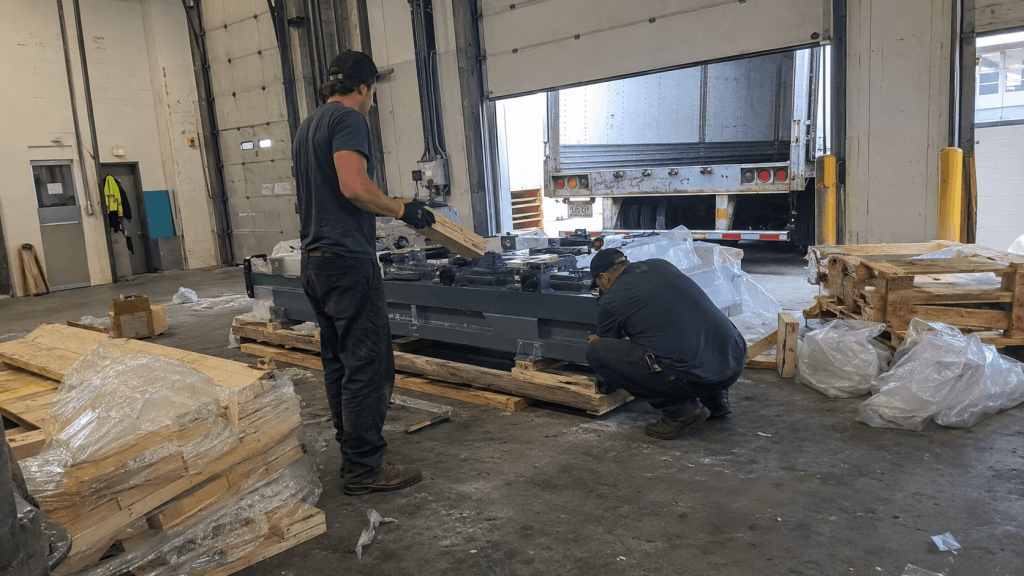
Industrial packaging workers performing crossdock recovery services by repacking and reblocking a shifted load at a commercial loading dock.

The call every operations manager dreads: your carrier is at the final destination, the load shifted in transit, and it cannot be safely unloaded. The end customer is waiting. Your reputation is at risk. And you have no good options, unless you know about crossdock recovery services.

This is a real situation one of our customers faced. Here is how Express Packing resolved it.

— The Challenge

When a Load Falls in Transit

The customer’s product shifted and fell inside the delivery vehicle during transit. By the time the truck arrived at the end customer’s location, the load was displaced and could not be safely unloaded.

This happens more often than most shippers expect. Even a load that was properly packed at the origin can shift if it encounters road vibration, a hard brake, or a sharp turn. Once a load falls or becomes unstable inside a trailer, the risk compounds quickly:

  • Forcing an unsafe unload risks injury to dock workers
  • Improper extraction can cause secondary damage to the product
  • A failed delivery at the end customer’s dock creates a customer service crisis the shipper didn’t cause but still owns

Standard carriers are not equipped to handle this type of recovery. They don’t have the rigging, equipment, or packaging expertise to safely stabilize and reload a compromised cargo. This customer needed a specialist.

— The Express Packing Solution

The Express Packing Solution in Three Steps

Instead of rejecting the delivery or abandoning the shipment, the carrier brought the load to Express Packing’s Indianapolis facility. Our team handled the recovery in three clear steps.

Step 1: Safe Unloading

Our crew used proper rigging and lifting equipment to extract the displaced product from the trailer without causing additional damage. Knowing how to read a shifted load, assess weight distribution, and determine the safest extraction point requires real experience with industrial freight. This is not a job for improvised solutions.

Step 2: Repack and Secure

Once the product was safely off the truck, our team repacked and secured it correctly. This meant evaluating the product’s condition, selecting the right blocking and bracing, and building a configuration that would hold through the rest of the journey. We treat every recovery like a new packaging job, because one weak point in the repack can undo everything.

Step 3: Safe Reload

The repacked product was reloaded onto the carrier vehicle in a way that allowed for safe unloading at the final destination. This step accounts for how the end customer’s dock is set up and what equipment they will use to receive the shipment.

— The Result

A Completed Delivery and a Protected Relationship

The customer avoided a failed delivery. No additional product damage occurred. The end customer received their shipment. The shipper’s relationship with their end customer was preserved.

What could have become a costly chain of events (rejected delivery, emergency reorder, insurance dispute, damaged account) was resolved quickly and professionally.

Why Crossdock Recovery Services Matter for Industrial Shippers

Even with the best packaging at origin, things go wrong in transit. Crossdock recovery services exist for exactly that reason: to give shippers a reliable option when a load is compromised before it reaches the final destination.

Here is what makes this service different from a standard carrier’s capabilities:

Specialized equipment. Recovering a shifted industrial load requires more than a forklift. Express Packing has the facility, rigging, and tools to handle heavy, awkward, or top-heavy cargo safely.

Packaging expertise. A recovery is only as good as the repack. Our team has over 50 years of experience in industrial packaging, which means we know what blocking and bracing the load actually needs to make it through the rest of the journey intact. We are also ISPM-15 certified for international shipments, which speaks to the level of rigor we bring to every packaging decision.

Speed. A delivery in limbo costs money every hour. Our team moves quickly because we understand the operational urgency behind every freight recovery call.

It is also worth noting that many in-transit load failures can be prevented with the right packaging from the start. Express Packing builds custom wood crates engineered specifically for how your cargo will travel, accounting for weight distribution, fragile points, and the realities of over-the-road transit. If you have had a load shift in the past, that is a signal worth addressing at the packaging level before the next shipment goes out. For more on building a freight process that holds up under pressure, see our guide to preparing your supply chain for peak season shipping.

Key Benefits at a Glance

  • Fast recovery from delivery disruptions
  • Safe unloading of displaced or fallen cargo
  • Professional repack and blocking to prevent secondary damage
  • Reload configuration designed for safe end-customer unloading
  • Minimized delay to the end customer
  • Protection of shipper-to-customer relationships
FAQ

Frequently Asked Questions

What types of loads can Express Packing recover at their facility?

We handle a wide range of industrial freight, including heavy machinery, manufacturing equipment, and sensitive industrial components. If it shipped in a crate or on a pallet, we can assess and recover it.

We understand freight recoveries are time-sensitive. Contact us directly at (317) 821-3734 to discuss your situation and timeline. Our team will give you a realistic answer based on your specific load and location.

Yes. Our custom wood crating and blocking services are engineered to keep loads stable through the full transit cycle. If you have experienced in-transit shifting, we can evaluate your current packaging and recommend specific improvements.

We can work with you and your carrier to document the condition of the freight before and after recovery. For formal insurance claims, we recommend involving your carrier and insurance provider directly.

Standard crossdocking transfers a shipment from one carrier to another at a facility without long-term storage. Crossdock recovery is specifically for compromised loads that need to be safely extracted, repacked, and reloaded before they can continue their journey.

Facing a similar shipping challenge?
Express Packing’s team is ready to help.